The Reminder That Never Arrived
In short
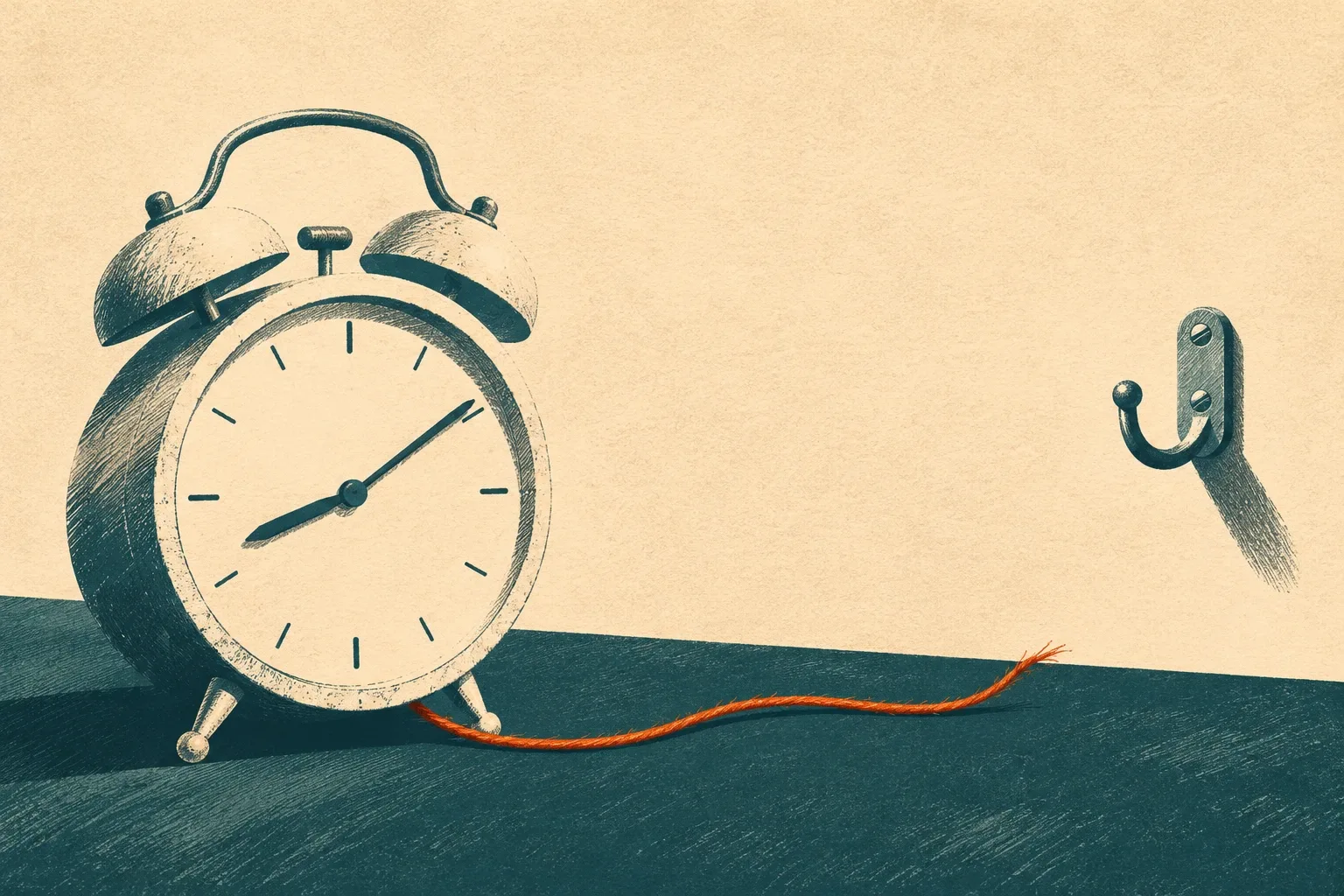
In October an agent told me it would resume work when a check finished; the check passed and nothing resumed until I asked, about nine hours later. Two weeks on, an alert routine we were testing in OrgOS had run about 110 times and delivered no alert, because a webhook had never been set in staging. Then a machine reset rolled an agent’s files back by a day. None of this asked for a more capable model. Each failure sat in a transition nobody had made explicit. Rather than load the system with rules, I now look for the few operating conditions that guarantee the essential, and I examine each failure by asking what needed to be true and was not.
On the night of 4 October, one of the agents told me it would pick the work back up as soon as a check on a code change had finished. It added that I did not need to do anything.
The check passed at 21
. Nothing resumed.At 6
the next morning I asked about it, and only then was the matter picked up again. About nine hours had gone by.The agent later explained that the mechanism meant to wake it when the check finished had never run. That is its account, and I have not verified it independently. What I can say is narrower: a commitment was made with a time attached, the time came, and the only thing that brought the work back was me asking.
I have been building OrgOS so that the work of a small company does not depend on my memory. That night it depended on me waking up and remembering.

What I thought the hard part was
When I started working with agents, almost every question I asked was about capability. Which model, which prompts, which integrations and tools. Can the model understand the request? Can it write the code, use the tools, find its way through a repository, read an incident and tell me what happened?
Those are fair questions, and for a while they were the right ones. Then the answers started coming back yes. The model understood. The code worked. The agent reported the task complete.
Looking back, that turned out to be the easiest part.
What I did not expect was how often something would still be missing after all of that had gone well. I kept assuming the gap was a gap in understanding, and that a better model or a better prompt would close it.
Nothing about that night was a failure of understanding. The agent knew exactly what it had promised. It took a second episode, two weeks later, for me to stop looking for the problem in the model.
About 110 runs
By mid-October we were testing a part of OrgOS meant to close exactly this gap: a routine, scheduled every 15 minutes, that goes through the commitments on record and sends an alert when one needs attention. Both the routine and the commitment record were in staging.
On 21 October a 24-hour review of that test was due at around 14
. It was recorded at 17. The agent who did the review found that the routine had run about 110 times and delivered zero alerts. Each time, the send to Slack had been skipped, because the webhook address it needed had never been set in the staging environment.The cause was almost embarrassingly ordinary. One missing value, and the test we had planned never actually took place.
I want to be careful about what this shows, because it is less than the story suggests. We did not find the routine’s raw logs, so I cannot say it reported success while skipping the alerts. I also have no confirmed case of a second commitment to me being missed because of that webhook. What I know is this: the routine executed, the send was skipped for lack of the webhook, and the review classified the result as a failure.
There is one more detail. When the review happened, the test item had no active owner. The agent who found the problem took responsibility for it and recorded the deviation.
So there was activity, on schedule, for more than a day. The outcome the activity existed for was not there, and for most of that time nobody was placed to notice.
Where the chain broke
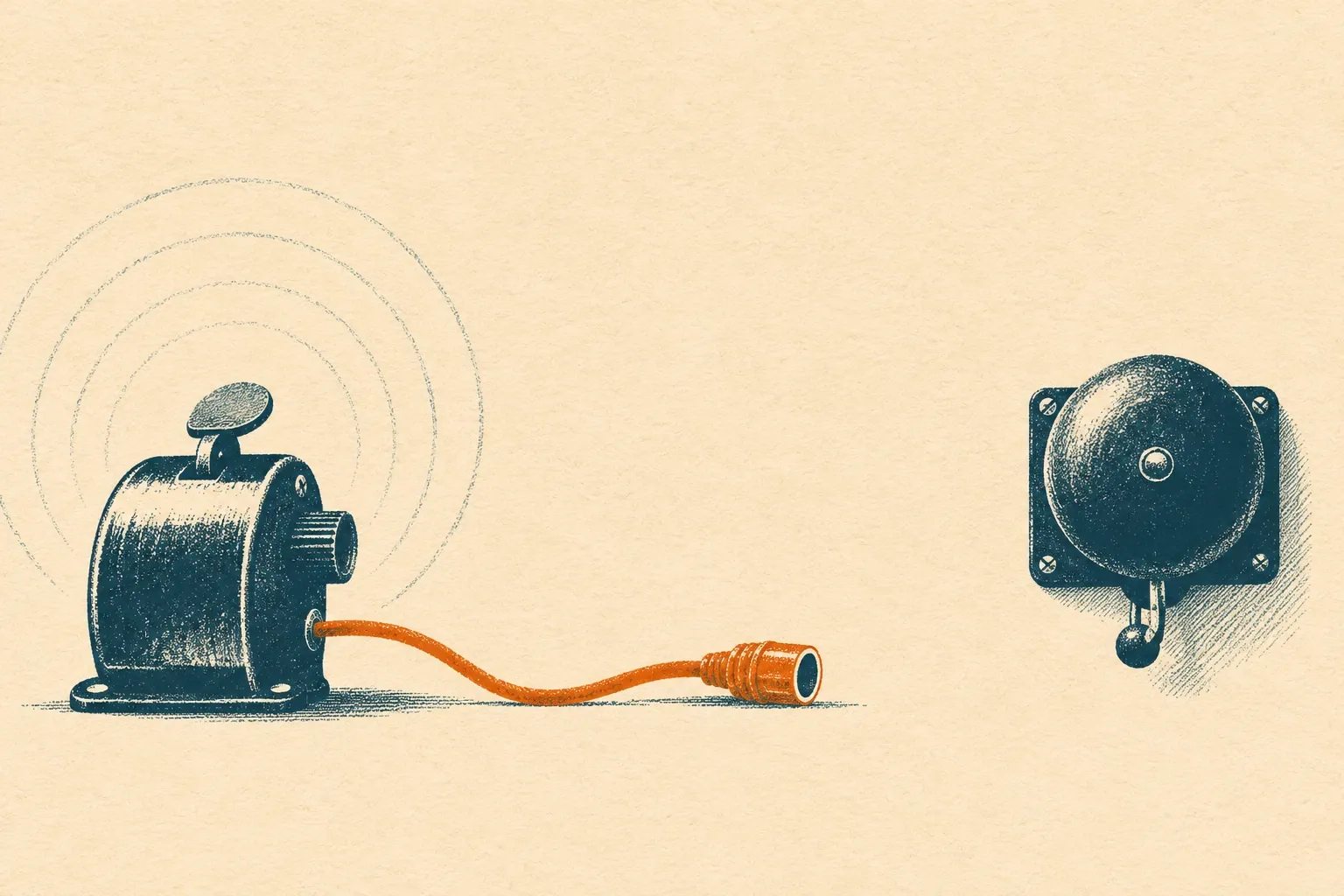
In earlier essays I wrote that knowing is not the same as continuing, and that organizations fail in the transitions. I believed it when I wrote it. October showed me my own system doing it twice, through two different mechanisms.
On 4 October the knowledge existed: the check had a result at 21
. Nothing carried that result back to the work. On 21 October a routine was running every 15 minutes, and nothing connected it to a person. In both cases the capable part did its job. What was missing sat between two things that worked.That changed how I think about agents. I had been treating “the system knows” as most of the work. Here it was the easy half. A commitment that is recorded and dated is still only a fact in a database until something carries it to whoever can act. I had built the knowing and assumed the carrying.
On 27 October I approved an amendment to the operating constitution. It opens with a sentence I like: a commitment with a time is born with an alarm clock.
Whoever takes on a commitment with a date and a time must, in the same moment, create an operational trigger and record its time and its name. Each autonomous checkpoint gets its own trigger. A commitment without one is labelled as having no alarm clock and returned to its owner. A trigger that fails or fires late must produce a statement of deviation. The OrgOS alert may serve as that trigger once the commitment record is in production.
The rule matters less for what it says than for where it places the obligation. It no longer asks whether a check exists somewhere. It asks whether the path from the commitment to a person exists at the moment the commitment is made, when someone is still paying attention to it.
I should mark the limit. The rule is in force in the constitution. I have not confirmed that it is being enforced effectively in day-to-day operation. The commitment record was still in staging, and a review planned for 9 November is one I have not verified took place.
The same gap, in memory
Two days after that review, a third episode taught me the same thing from another direction.
On 23 October at 9
, one agent noticed something was off. A minute later another checked the files on disk. The central files had gone back to their state at 16 the previous day. The decision log was cut short, and several later records were gone.What happened next is the instructive part. Three decisions were recovered from the OrgOS record within about ten minutes. Everything else fared worse. A set of recorded facts was regenerated, without all of the original narrative. The daily report for the 22nd was regenerated too, and the original is lost. The file holding one rule was simply absent. Updates to a history of business opportunities did not come back.
Three days later I confirmed that I had used the machine’s reset and update function that morning, and the incident record attributes the cause to the restoring of an old snapshot. That attribution rests on my account. The technical report found no independent evidence of it inside the machine.
It would be easy to file this under my own mistake and move on. What stayed with me was what the loss revealed. The agent’s working machine had quietly become a place of authority. Decisions had been made there and documents produced there, and their survival depended on that machine staying as it was. Nobody had decided this. It happened because that is where the work was.
On the day of the incident itself, I approved another amendment: canonical storage outside the machine, with a copy in OrgOS. The list of what survived had already made the argument. What had a copy in the record came back in minutes. What lived only where it was produced did not.

This changed what I mean by memory. In most conversations about agents, memory means retrieving earlier conversations, summarizing context, storing embeddings. Those are useful. But a conversation history tells me what was said. An operational record has to tell me what is true now. Before the reset, I had been leaning on the first and believing I had the second.
I met another version of this gap in a conversational product, where a fluent reply hid the fact that half of a request had been dropped. I wrote about that one separately.
A few conditions, not more rules
Put side by side, the three episodes have the same shape. The capable part worked. The failure sat in something nobody had written down: who gets told, and where the truth is kept.
The natural response is to add rules, and we did add two. I am wary of that reflex. Each rule is reasonable on the day it is written, usually the day after something went wrong. Enough of them, and the system spends its capacity on satisfying its own controls. Governance can consume what it was meant to protect.
So the model I am currently working with is narrower. I am no longer trying to list everything that could go wrong. I am trying to find the smallest set of operating conditions that must stay true while agents work, so that the rest can be left to them.
The difference I draw between the two is this. A rule says what should happen. A condition is something the system keeps true, or flags when it stops being true, without depending on anyone remembering the rule. The two October amendments are still written rules. What I look for in them is the condition they create. So far the list is short:
- a commitment with a time has a trigger that reaches a person from the moment it exists;
- work that matters has a canonical home that does not depend on the place it was produced;
- what is not known is recorded as not known.
The third joined the list while I was writing. Twice in this essay I had to say that an explanation was someone’s account and not a verified cause. In our incident records, we have started separating confirmed cause, suspected cause and unknown cause. How to tell well what was shown from what was only said is a matter of evidence, and it deserves its own piece.
What keeps the list short is the analysis that comes before any rule. In October, the alert deviation and the machine incident were recorded, analysed, and each ended in an amendment. The question I try to ask in that analysis is not “which rule prevents this?” but “what needed to be true and was not?”. The first question always has a rule for an answer. The second can have a trigger, a copy or an owner for an answer.
I do not know yet how long that list needs to be, or whether it stays short as the work grows. Three episodes in one month are not a theory. My hypothesis, for now, is that this holds for agents and for teams alike: autonomy rests less on watching more closely and more on knowing exactly what cannot fail.
What I can say is that the question I ask has changed. I used to ask what a capable agent could do. I now ask what must remain true while it does it, and who would find out if it stopped being true.
A question to take with you
If an AI agent disappeared halfway through its work, what would your organization still know for certain?