Who Decides What the System Can Do
In short
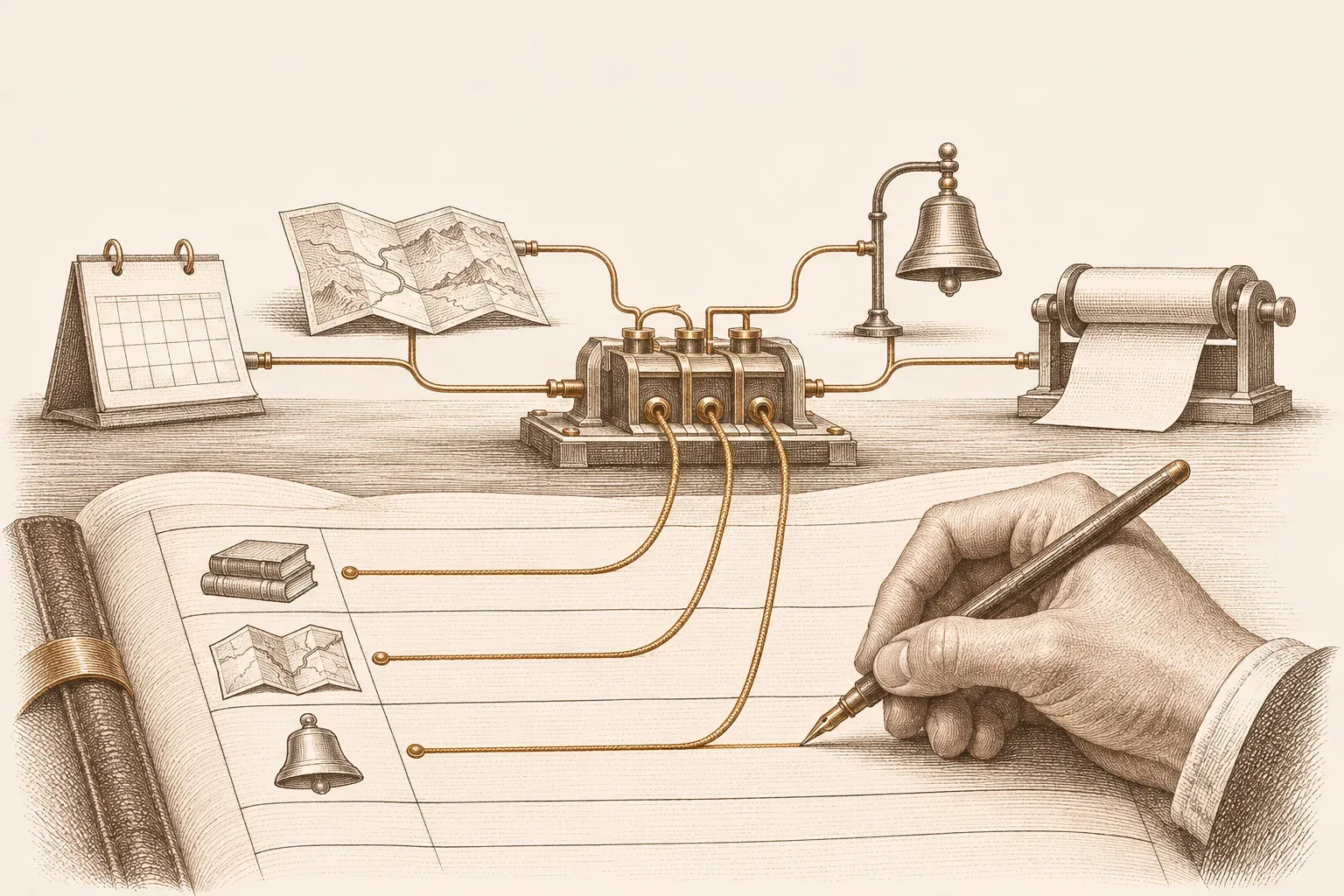
In Tredane’s assistant, a language model reads each message the cheap rules missed and returns one label from a closed list. The list defines the requests the system handles through fixed routines. Each label is a promise: this kind of message gets this answer, from this source, with these consequences. Drawing the line between two labels depends on the answer’s source and approval, not on how the customer talks. Deciding what a label may trigger is a product choice. And no label enters the list before the routine that answers it exists. Business analysts, product managers and engineers each own a different part of that promise.
For a while, the classifier in our test environment knew how to recognize one thing: whether the customer wanted the calendar.
That was its whole vocabulary. The previous essay described the path a message takes through Tredane’s assistant: cheap rules first, then a language model that returns only a label, then a fixed routine that builds the reply from the clinic’s catalog. With one label, that path had a hole in the middle. When the rules missed a price question phrased in an unusual way, the classifier had nothing to say about it, and the message fell through to the model that writes free text. That model produced what a helpful reply usually looks like: “free slots” that did not exist, buttons nobody asked for.
The fix seemed obvious. Teach the classifier more labels.
It was not a modelling task. Every label we added forced a decision we had to take responsibility for: what this label means, where its answer comes from, and what it is allowed to set in motion. The list of labels turned out to define the requests the system handles through fixed routines. Somebody has to write it.
Who decides what the system can do, and on what basis?
A label is not a topic
The intuitive way to build a list of labels is to group the ways people talk. Questions about money go together, questions about time go together, complaints go together. That produces a tidy map of language. It does not produce a working assistant.
In Tredane, a label is a promise with three parts. When a message gets this label, the customer receives this kind of answer, built from this source, with these consequences, and nothing else. “Price” means: the price comes from the clinic’s price list, never from a sentence the model composed, and if the price belongs to a service, an “Open calendar” button may follow. “Reschedule” means: a fixed sentence and a link that opens the rescheduling page; the chat itself changes nothing.
Seen that way, a label is closer to a line in a contract than to a word in a dictionary. It describes something the clinic is willing to stand behind.
Eight promises
This is the closed list the assistant works with today, as decided in November 2026. The examples illustrate each label; they are not exact phrases. A message reaches its label through patterns in code or through the classifier, never by matching a fixed sentence.
| Label | Examples of what customers write | Where the answer comes from |
|---|---|---|
| Calendar | “I want to book”, “any openings?”, “show me the calendar” | A fixed sentence and the “Open calendar” button |
| Calendar + information | “how much is the cleansing, and is there a slot tomorrow?” | The information first, then “Open calendar” in the same message |
| Reschedule | “I need to change the day” | A fixed sentence and a link to reschedule on the web page |
| Cancel | “I can’t make it” | A fixed sentence and a link to cancel on the web page |
| Price | “how much is [service X]?” | The clinic’s price list |
| Team | “I want to talk to someone” | A fixed sentence and a “Talk to the team” button |
| Catalog question | “what does it include?”, “do you do [service X]?”, opening hours, policy, address | The clinic’s catalog. If the clinic has not recorded that fact, a fixed sentence says so instead of guessing |
| Clinic question | parking, what to bring, payment on the day | An entry the clinic published in its knowledge base, quoted without paraphrase |
Messages routed outside these eight go to the open-question path, where a model writes prose. The list defines the fixed response paths; it does not guarantee correct routing. If a price question is mistaken for an open question, it can still reach the free-text writer.
None of the eight rows is a technical artifact. Each one records a decision about what the clinic says, in whose words, and what happens next. Three of those decisions show how much judgment hides inside a row.
Where one label ends and the next begins
To a customer, “where are you?” and “is there parking?” are the same kind of question. Both are about getting to the clinic. A classifier trained only to group similar sentences would put them together.
We put them under different labels.
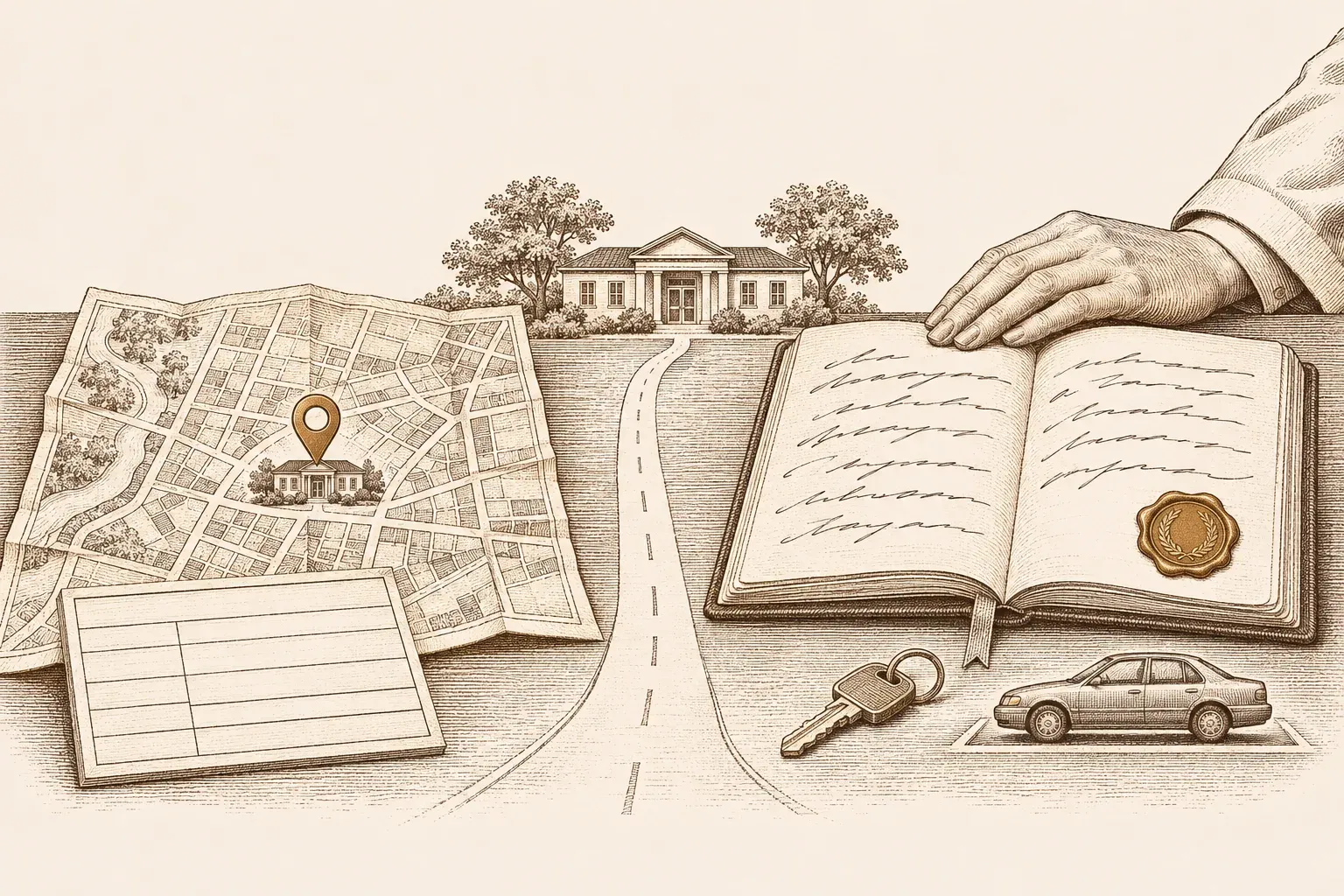
The address lives in the catalog, as structured data the clinic fills in once, and the reply can carry a button that opens the map. Parking lives in the clinic’s knowledge base, a small set of question-and-answer entries that the clinic’s owner writes in their own words, groups in categories and publishes. Only the owner can publish. The answer may mention a garage next door, a street that is easy on weekdays, a discount at a nearby lot. The assistant quotes the entry as published. It does not summarize it, and by default it does not add “Open calendar” to it, because a reply about parking is not an invitation to book.
The knowledge base is small on purpose. In the pilot it holds up to about fifteen published entries, each answer at most 500 characters. There is no semantic search choosing passages and no model rewriting them: the entry that matches is quoted, and if none matches, the assistant does not invent one. Those limits are product decisions too. They trade breadth for answers the clinic has already read and approved.
So the boundary between “catalog question” and “clinic question” does not follow the customer’s language. It follows how the answer is recorded and approved. Both answers belong to the clinic. One is a structured field the system can read; the other is a paragraph the clinic publishes in its own words. Each has its own rules for presentation and for what may follow. Splitting them was a decision about responsibility, recorded in November 2026.
The “calendar + information” label shows the same tension from another side. “How much is the cleansing, and is there a slot tomorrow?” is two requests in one breath. We could give it one label of its own, as we do today, or return two labels and let the server join the replies. Both work. They differ in how many labels the classifier must keep apart and in who carries the logic of combining answers. That choice is still open.
What a label is allowed to set in motion
The “team” label looks like the simplest of the eight. A customer asks for a person; the system hands over.
That is how it used to work. A typed request for the team paused the assistant by itself and passed the conversation to the staff. In our tests, the same mechanism did something nobody intended. A cap on booking links, meant to stop someone from asking for the calendar again and again, treated the sixth request in an hour as abuse and handed the conversation to the team, even when that request was “I want to reschedule.” A customer trying to change an appointment was sent to a person who had nothing to add.
The revision, made on 20 November, separates the label from the consequence. A typed request for the team now gets a fixed sentence and a “Talk to the team” button. Only the customer’s tap on that button pauses the assistant. Rescheduling and cancelling never go to the team because of the link cap; they keep their one-tap link.
The classifier was not wrong in any of this. “I want to talk to someone” really is a request for the team. What changed was the answer to a different question: should a guess about meaning be enough to change the state of the conversation? We decided it should not. A label may choose a sentence and a button. A change that matters, such as pausing the assistant, waits for something the customer did, not something the system inferred.
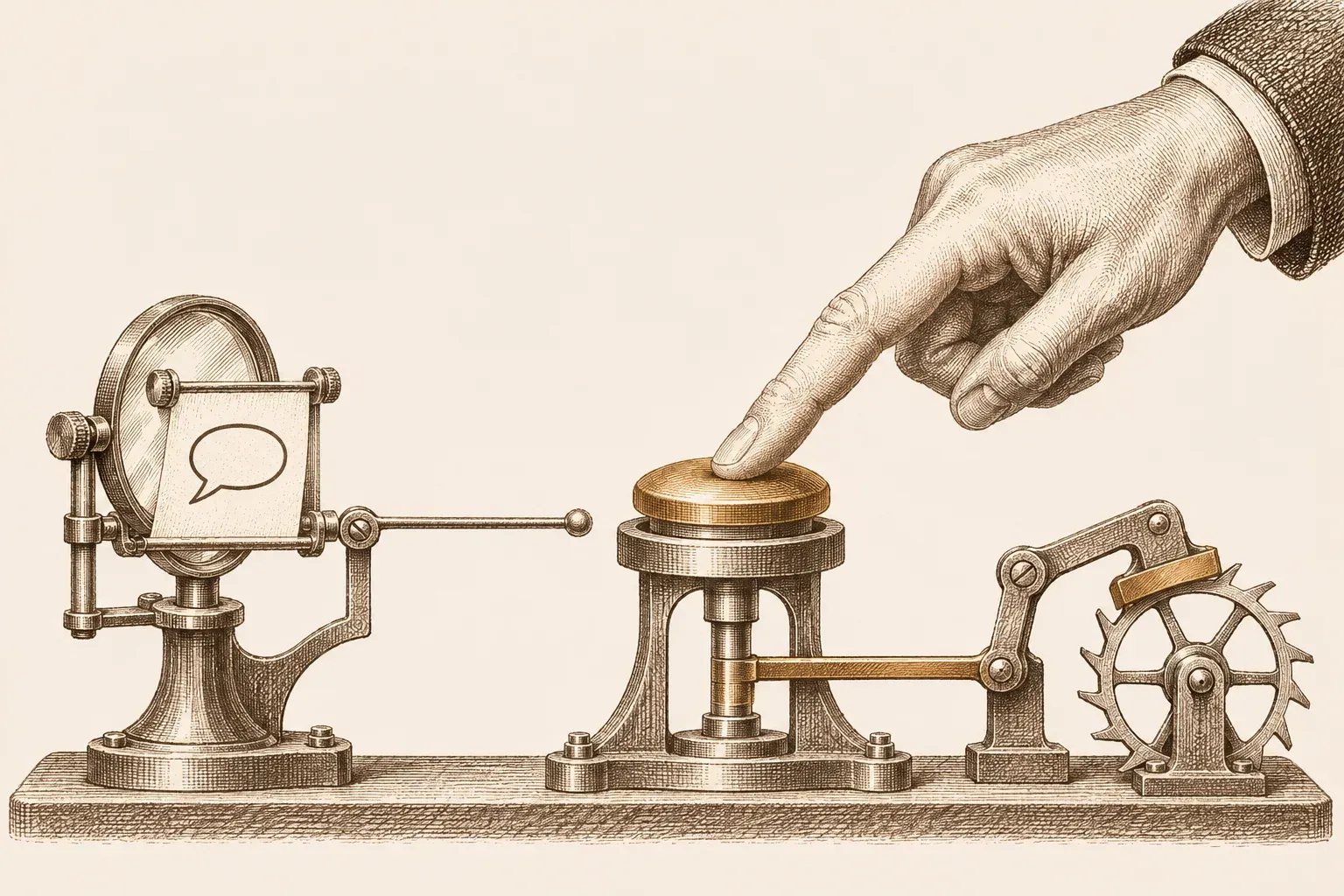
Even the buttons carry decisions about delivery. In our WhatsApp replies, “Open calendar” opens a web page; “Talk to the team” sends a reply that pauses the assistant. We keep these actions in separate bubbles. That delivery rule is invisible to the model. Someone had to write it into the routine behind each label.
Who decides
Reading the three cases together, the work of maintaining the list falls into three kinds of judgment. In a small team they may live in one person. They are still different jobs.
Meaning. Someone has to say what a label covers and what it does not, with real examples: which messages are “price”, which are “catalog question”, where a parking question goes. This is the work of a business analyst. Its output is not only a definition; it is a set of example messages, including the hard ones, that later becomes the test corpus the classifier is measured against. Meaning also reaches into the catalog itself: a catalog question can only be answered if the clinic recorded the fact. Someone has to decide which facts the catalog asks for, and notice which ones stay empty. An empty field is a gap in the product, not in the model.
Consequence. Someone has to decide what each label is allowed to produce: a sentence, a button, a link, a pause, nothing. Whether a reply about parking should invite a booking. Whether a typed request for a person should stop the assistant. These are product decisions, because they shape what customers experience and what the clinic is committed to.
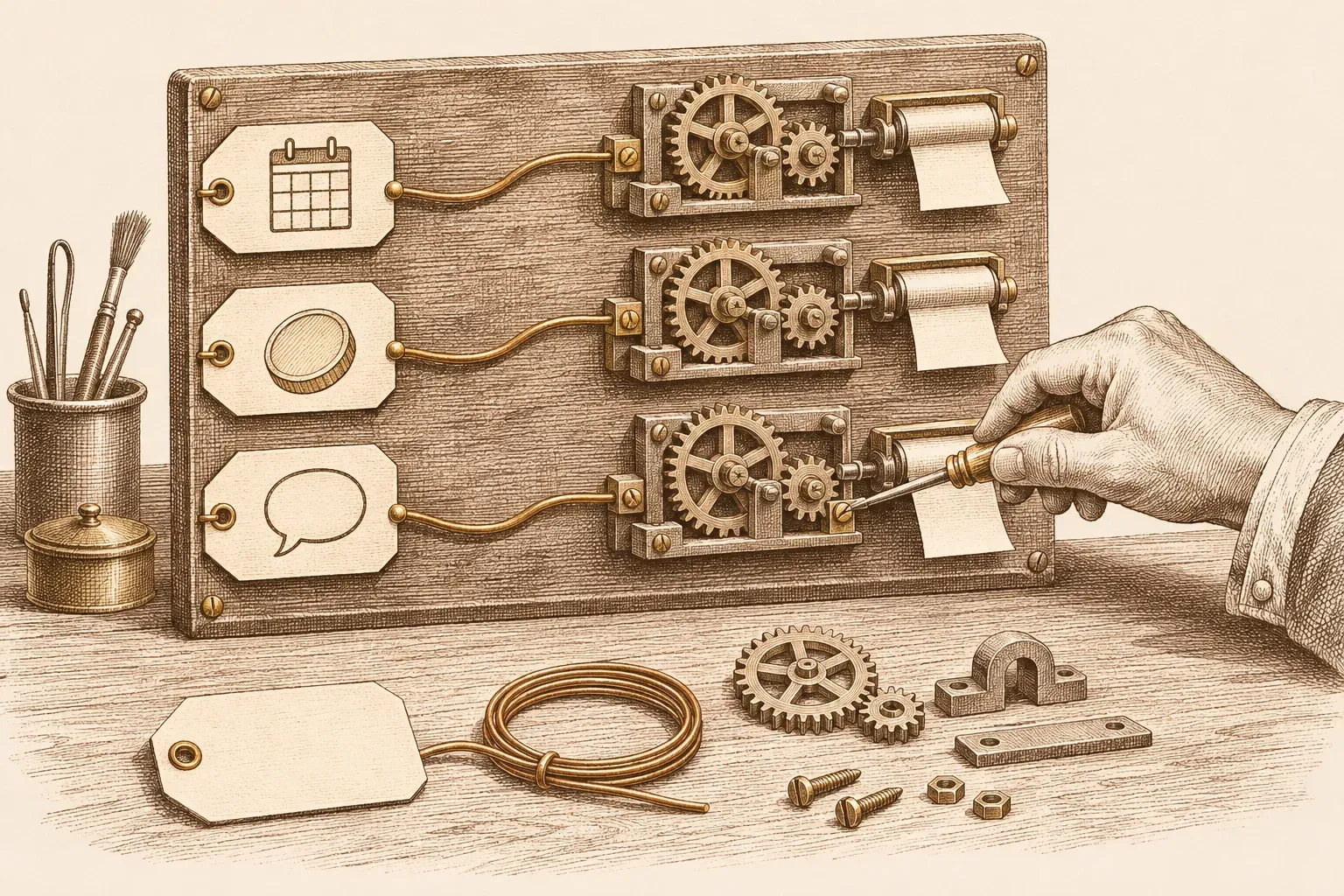
Wiring. Someone has to build the routine that turns each label into a reply, test it, and refuse labels whose routine does not exist yet. That last part is the rule that holds the list together: no new label without its routine already wired. Without it, the classifier can tag a message correctly, find no code to answer it, and hand the turn to the free-text writer. The label would be right and the customer would read invented text anyway.
There is also a short list of things the classifier is never asked to decide. It does not choose which service the customer means; the cheap rules do that when the name matches the catalog. It does not compete with the safety checks that come before it, such as a customer asking the assistant to stop. And the cheap rules only receive short, unambiguous patterns, like “show me the calendar.” The paraphrases go to the classifier, where a wrong guess costs less.
The list is the product
It is tempting to think that a better model removes the need for this list. A capable enough model could, the argument goes, understand any request and do the right thing.
What we found is that the hard part was never understanding the request. The classifier is quite good at noticing that someone wants to know about parking. The hard part is deciding that parking is answered in the clinic’s words, without a booking button, and that this is different from the address. A model can suggest or apply that decision. Approving it remains a human responsibility, because someone in the clinic must stand behind the sentence.
That is why I now think of the label list as one of the most important documents in the assistant. It is short. It changes rarely. And every line of it is a decision that a business analyst, a product manager and an engineer had to agree on before any customer saw the result.
One gap remains. A correct label is not enough if the next message loses the subject. After “do you do [service X]?”, the customer often writes “how much?”, without the name. The label for that second message is easy: price. The question is price of what. Answering it means deciding what the conversation should remember, and for how long, which is the subject of the next essay.
A question to take with you
If you wrote down every kind of request your system knows how to handle, who would have to sign each line?